How to Avoid Greenwashing Risks: A Definitive Editorial Guide
The proliferation of environmental claims in the global marketplace has created a paradoxical landscape for the conscientious consumer and the institutional investor alike. As the “green economy” expands, the verifiability of ecological assertions has struggled to keep pace with the sophistication of marketing departments. This gap between stated intent and operational reality is where greenwashing flourishes—a phenomenon that is no longer limited to vague slogans but has evolved into a complex array of data manipulation, selective disclosure, and symbolic signaling. For those navigating the hospitality and travel sectors, the stakes are particularly high, as these industries rely heavily on the exploitation of natural and social capital.
Identifying authentic sustainability requires moving beyond the aesthetic of “eco-friendliness” and into the mechanics of corporate governance and supply chain transparency. A hotel that offers organic linens while ignoring the methane leakage of its natural gas heating system is not merely making a trade-off; it is engaging in a systemic misrepresentation of its environmental impact. To address this, one must develop a forensic approach to travel planning—one that prioritizes quantitative disclosure over qualitative narrative. This analytical shift is essential for maintaining the integrity of the sustainability movement and ensuring that capital is directed toward truly regenerative practices.
The challenge of discernment is compounded by a fragmented regulatory environment. While some jurisdictions have begun to implement stricter anti-greenwashing laws, the global nature of travel means that a consumer may be comparing a property in a highly regulated market with one in a region with zero environmental oversight. This discrepancy necessitates a universal framework for evaluation, independent of local marketing laws. Mastering how to avoid greenwashing risks is, therefore, an exercise in literacy—the ability to read between the lines of a sustainability report and identify the structural gaps that signify performative commitment.
Understanding “how to avoid greenwashing risks”
To define the scope of how to avoid greenwashing risks, we must first recognize that greenwashing is rarely a binary of “truth versus lies.” Instead, it exists on a spectrum of obfuscation. At its most benign, it is the result of internal corporate silos where marketing teams are disconnected from operational reality. At its most malicious, it is a calculated strategy to capture the “green premium” without incurring the costs of actual decarbonization. Understanding this distinction is the first step toward effective risk avoidance.
A multi-perspective explanation of these risks reveals that stakeholders often fall into the “Symbolism Trap.” This occurs when a single, highly visible green act—such as eliminating plastic straws—is used to distract from a carbon-intensive core business model. For the traveler, avoiding this risk means ignoring the “front-of-house” symbols and interrogating the “back-of-house” systems. This includes looking at energy procurement, water circularity, and labor equity. If a resort cannot explain its waste-to-energy conversion process but spends thousands on an “eco-luxury” branding campaign, the risk of greenwashing is high.
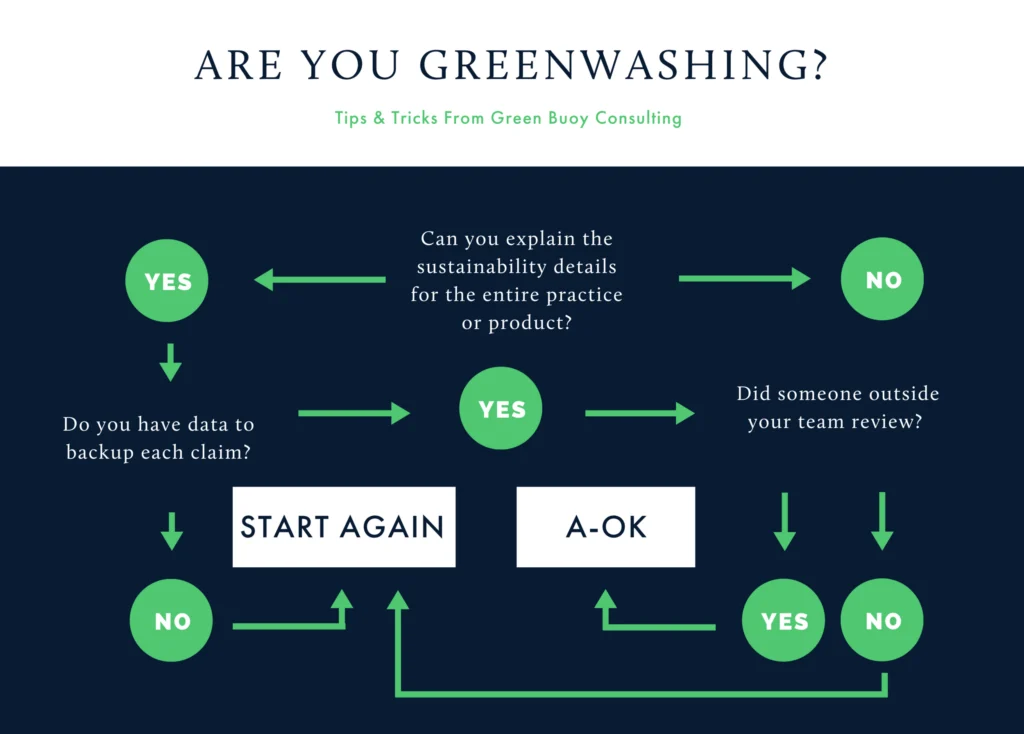
Oversimplification in this field often leads to a reliance on “checklists” that are easily gamed by clever operators. A property might check the boxes for “locally sourced food” by buying from a local middleman who imports industrial produce, thereby satisfying the letter of the checklist while violating its spirit. Avoiding these risks requires a shift from “box-ticking” to “systemic auditing.” This means asking for specific data: What percentage of total energy comes from on-site renewables? What is the verified carbon intensity per guest-night? Without these numbers, a claim is merely an anecdote.
Historical Context: The Evolution of Environmental Obfuscation
The term “greenwashing” was coined in the mid-1980s, specifically in the context of the hotel industry’s “save the towel” campaigns. While framed as an environmental initiative, it was primarily a cost-saving measure that did little to address the broader ecological footprint of large-scale hospitality. Since then, the practice has evolved alongside our understanding of climate change.
In the 1990s, greenwashing was often characterized by “The Sin of Vagueness”—using terms like “natural” or “eco-friendly” which had no legal or technical definition. In the 2000s, as certifications like LEED gained traction, we saw the rise of “Certification Spinning,” where buildings would achieve basic certification for minor architectural features while maintaining high-emission operational profiles. Today, we are in the era of “Net-Zero Theater,” where companies make bold claims about future decarbonization based on speculative technologies or low-quality carbon offsets that lack additionality. This historical trajectory shows a move from simple marketing fluff to sophisticated data-driven deception.
Conceptual Frameworks and Mental Models for Detection
Detecting misrepresentation requires a toolkit of mental models that allow for the rapid filtering of information.
1. The Materiality Filter
This model asks: “Is the claim addressing the most significant impact of the business?” For an airline, a claim about recycled napkins is immaterial compared to the carbon intensity of its jet fuel. If a company focuses its communication on low-impact areas while remaining silent on high-impact areas, it is likely greenwashing.
2. The Additionality Test
Specific to carbon offsets and “green” investments, this model asks: “Would this positive environmental outcome have happened anyway without the company’s intervention?” If a resort claims credit for “protecting” a forest that was already legally protected, it is engaging in a non-additional claim. True sustainability creates a new positive delta in the environment.
3. The Lifecycle Accounting Model
This framework evaluates the total impact of a “green” product from extraction to disposal. A “biodegradable” plastic cup that only breaks down in an industrial composter (which the hotel doesn’t have) is actually a conventional waste product. Understanding the lifecycle prevents falling for “solution-based” greenwashing, where the solution creates a new problem elsewhere in the chain.
Key Categories of Misrepresentation and Operational Trade-offs
When analyzing travel packages or hotels, it is helpful to categorize greenwashing by its functional area.
| Category | Typical Greenwashing Claim | Operational Reality (The Risk) | Verification Metric |
| Energy | “100% Carbon Neutral” | Reliance on unbundled Renewable Energy Certificates (RECs). | On-site generation vs. Grid mix. |
| Sourcing | “Farm-to-Table Dining” | Only herbs are grown on-site; meat/dairy are industrial. | Procurement logs / Local vendor list. |
| Waste | “Zero Waste to Landfill” | Waste is sent to a high-emission incinerator. | Diversion rate vs. Incineration rate. |
| Social | “Supporting Local Artisans” | Artisans are paid sub-living wages for bulk items. | Fair trade certification / Wage audits. |
| Carbon | “Net-Zero Flight” | Using offsets with no verified sequestration.Science-Based | d Targets (SBTi) alignment. |
Detailed Real-World Scenarios and Second-Order Effects
Scenario A: The Carbon-Neutral Island Resort
A resort in the Maldives claims carbon neutrality. It uses solar panels for daytime power but runs diesel generators all night. It offsets the diesel emissions through a forestry project in a different hemisphere.
-
The Risk: This creates a “false sense of security” for the traveler.
-
Second-Order Effect: Because the resort feels it has “solved” the problem via offsets, it has no incentive to invest in the expensive battery storage needed to eliminate the diesel generators.
Scenario B: The “Eco-Certified” Urban Hotel
A hotel in New York City displays multiple green logos. Upon inspection, the logos are from pay-to-play organizations that do not conduct on-site audits.
-
The Risk: “Certification Inflation.” When travelers see too many meaningless logos, they stop trusting legitimate certifications like the Global Sustainable Tourism Council (GSTC).
-
Failure Mode: Legitimate sustainable hotels lose their competitive advantage because they are out-marketed by “certified” greenwashers.
Planning, Cost, and Resource Dynamics of Verification
Avoiding greenwashing is not free. It requires an investment of time and, occasionally, financial resources to access audited data.
| Resource | Low-Effort Path | High-Integrity Verification | Impact on Cost |
| Time | 5 mins (Reading the “About” page) | 2 hours (Reviewing ESG reports) | Opportunity cost of time. |
| Tools | Google Search | Using platforms like EarthCheck or Travalyst | Higher cognitive load. |
| Financial | Free | Paying for specialized “impact” travel agents | 5-10% service premium. |
Range-Based Verification Table
| Depth of Audit | Method | Reliability | Use Case |
| Surface | Website claims & Photos | 10% | Casual, low-impact travel. |
| Intermediate | Checking GSTC-accredited logos | 60% | Standard leisure travel. |
| Deep | Cross-referencing annual impact data | 95% | Corporate procurement/High-impact travel. |
Risk Landscape: Taxonomy of Compounding Failures
The danger of greenwashing is not just a single misleading claim; it is the compounding of failures across an ecosystem.
-
Regulatory Risk: As governments (like the EU with the Green Claims Directive) crack down, travelers and companies using greenwashed services may face reputational damage or legal scrutiny.
-
Resource Misallocation: Capital that could have gone to a resort building a revolutionary water-desalination plant instead goes to a greenwasher, slowing the overall pace of industry innovation.
-
Consumer Cynicism: Repeated exposure to greenwashing leads to “green-fatigue,” where consumers stop making any effort to be sustainable because they believe all claims are false.
Measurement, Tracking, and Evaluation of Authenticity
To maintain a long-term strategy on how to avoid greenwashing risks, one must adopt a quantitative mindset. Authentic properties will provide:
-
Leading Indicators: Specific, measurable goals for the next 12 months (e.g., “Reducing water intensity by 12% through low-flow retrofitting”).
-
Lagging Indicators: Verified data from the previous year (e.g., “Total Scope 1 emissions were 450 tons CO2e”).
-
Third-Party Documentation: Look for the “Independent Auditor’s Report” at the end of a sustainability disclosure. If the data is only “self-reported,” its reliability is significantly lower.
Common Misconceptions and Oversimplifications
-
Myth: A “Green” logo means the hotel is sustainable. Correction: Many logos are marketing memberships, not environmental audits.
-
Myth: Eliminating plastic is the most important step. Correction: Waste is often the smallest part of a hotel’s footprint; energy and HVAC are the largest.
-
Myth: If a hotel is in a beautiful nature reserve, it must be eco-friendly. Correction: Building in a reserve often causes more ecological damage than staying in an efficient urban hotel.
-
Myth: Carbon offsets “cancel out” a flight. Correction: Offsets are a financial contribution to a project, not a physical removal of the specific CO2 molecules you emitted.
Conclusion
The ability to distinguish between environmental rhetoric and operational reality is the most critical skill in the modern travel economy. As the sophistication of greenwashing grows, so too must the skepticism of the audience. To truly address how to avoid greenwashing risks, we must move beyond the allure of the “green” brand and demand a level of transparency that matches the urgency of the climate crisis. This involves a commitment to data, an understanding of lifecycle impacts, and a refusal to accept symbolic gestures in place of systemic change. In the end, the only way to ensure the future of the destinations we love is to support the properties and operators that are honest about their footprint and transparent about their journey toward true sustainability.